Unlock Your Blocks with Elyssa
You know you are meant for more, but you keep getting stuck in the same frustrating cycle!
I see you.
I’ve been there.
And I’ve got you!
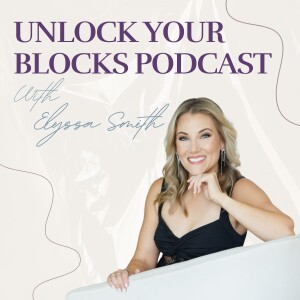
I’m Elyssa Smith, a trauma-informed executive coach and the host of Unlock Your Blocks Podcast. I know what it’s like to feel overwhelmed by triggers, stuck in survival-mode, and cycles of self-sabotage.
The great news is that you can overcome all of this! I know firsthand how to follow the roadmap to freedom. You can rewire your survival brain, heal the trauma holding you back, and unlock the next level of success and confidence!
On Unlock Your Blocks, I’ll teach you the exact tools and strategies to break free from self-doubt, regulate emotions, and finally be able to follow through with your biggest goals!
Subscribe now! Let’s get you the right keys to unlock your blocks and create the life you were made for!




Episodes
9 hours ago
9 hours ago
11 min
Have you ever reread the same email five times, lost your train of thought mid-sentence, or walked into a room and completely forgotten why you were there?
When that starts happening more than occasionally, it can feel unsettling — especially if you’re normally sharp, capable, and used to operating at a high level. But sometimes forgetfulness isn’t about your intelligence or your ability to focus. It’s about how much stress your brain and nervous system are trying to manage at once.
In this episode, Elyssa breaks down why stress can interfere with short-term memory, how survival mode redirects your brain’s resources toward perceived threats, and why high performers are especially quick to blame themselves when their mental clarity starts to slip.
You’ll also learn a simple five-step process for getting information out of your head, reducing cognitive overload, and helping your brain focus on one manageable next step at a time.
✅ What You'll Learn
✔️ Why stress can make normally simple things harder to remember✔️ How survival mode affects short-term memory and mental clarity✔️ Why your brain prioritizes perceived threats over emails, tasks, and everyday information✔️ Why high-pressure days can leave you feeling scattered or mentally foggy✔️ How self-criticism can drain even more of your available capacity✔️ Why trying harder to remember everything can actually create more mental strain✔️ How a purposeful brain dump can reduce cognitive overload✔️ Elyssa’s five-step process for regaining focus when your brain feels scrambled✔️ Why breaking a task into an extremely small physical next step makes it easier to start✔️ How external systems can support your memory instead of requiring your brain to hold everything✔️ Why focusing on one step at a time can help your nervous system recover bandwidth
🕒 Episode Chapters
00:12 – Understanding how stress affects your brain01:49 – The physiological basis of memory lapses under stress03:56 – Why high performers experience mental fog04:46 – The role of the nervous system in cognitive function05:35 – Practical strategies to manage mental overload07:22 – The five-step process to regain mental clarity08:53 – Using external systems to support focus11:05 – Download Elyssa's nervous system hacks guide
💬 Free Resource for Women
✨ The Procrastination Mini Reset Guide
Five simple nervous system exercises to help you reduce mental overload, step out of survival mode, and get more of your focus and clarity back.
👉 https://elyssasmith.com/reset
🎥 Watch Elyssa’s TEDx Talk
Why You Procrastinate - and How to Stop it for Good | Elyssa Smith | TEDxBabsonCollege
Learn more about what’s happening beneath procrastination and why your nervous system can make it harder to focus, start, or follow through even when you know exactly what you need to do.
👉 https://youtu.be/ctyqx6trUmo?si=_-hBFmbN9gJBVrHu
💖 For Women Ready for Their Next Breakthrough
Book your FREE 15-minute Unlock Your Blocks Focus Call to uncover what may be keeping you stuck in stress or survival mode and get clarity on your next step.
👉 https://elyssasmith.com/focus
Nov 2, 2026
Nov 2, 2026
14 min
Have you ever had someone ask, “What do you need?” right in the middle of an overwhelming moment and realized you genuinely had no idea how to answer?
It may not be because you’re disconnected from yourself. For many high achievers, years of prioritizing performance, other people’s needs, and getting through the next urgent thing can teach the nervous system to override its own internal signals.
In this episode, Elyssa breaks down why overwhelm can make it so hard to know what you need, how childhood experiences can train you to ignore your own signals, and why a survival skill that once helped you succeed can eventually lead to burnout and self-abandonment.
You’ll also learn Elyssa’s simple “Three-Level Needs Check,” a practical way to reconnect with what your body, nervous system, and life actually need from you next without trying to solve everything at once.
✅ What You'll Learn
✔️ Why your brain can seem to shut down when someone asks what you need✔️ How childhood experiences can teach you to prioritize performance over internal signals✔️ Why overriding your own needs can start as a useful survival skill✔️ How self-ignoring can eventually make it difficult to recognize what you feel or need✔️ Why high performers can be especially vulnerable to burnout and self-abandonment✔️ How unpredictable, high-pressure environments keep your nervous system focused on outcomes✔️ Why reconnecting with your needs is a skill you can learn as an adult✔️ How to use Elyssa’s Three-Level Needs Check when you feel overwhelmed✔️ How small physical needs like food, water, movement, or rest can help communicate safety to your nervous system✔️ How to identify whether your nervous system needs less stimulation, reassurance, space, connection, or a slower pace✔️ Why focusing on the next right step can feel more manageable than trying to control the entire outcome
🕒 Episode Chapters
00:12 – Why Your Brain Stops When Overwhelmed01:01 – The Double Birthday Party Story01:54 – Why We Learn to Override Our Needs04:07 – When a Survival Skill Becomes a Problem04:51 – High Performers and Burnout08:33 – The Three-Level Needs Check09:40 – Level 1: What Does My Body Need?10:56 – Level 2: What Does My Nervous System Need?11:48 – Level 3: What Does My Life Need Next?12:58 – Your Free Reset Guide
💬 Free Resource for Women
✨ The Procrastination Mini Reset Guide
Five simple nervous system exercises to help you step out of survival mode, reconnect with what you need, and move forward with more peace, clarity, and productivity.
👉 https://elyssasmith.com/reset
🎥 Watch Elyssa’s TEDx Talk
Why You Procrastinate - and How to Stop it for Good | Elyssa Smith | TEDxBabsonCollege
Learn more about what’s happening beneath procrastination and why your nervous system can keep you stuck even when you know exactly what you want to do next.
👉 https://youtu.be/ctyqx6trUmo?si=_-hBFmbN9gJBVrHu
💖 For Women Ready for Their Next Breakthrough
Book your FREE 15-minute Unlock Your Blocks Focus Call to uncover what may be keeping you stuck in overwhelm or survival mode and get clarity on your next step.
👉 https://elyssasmith.com/focus
Oct 26, 2026
Oct 26, 2026
13 min
Have you ever had a strong feeling about what you should do next, but couldn’t tell whether it was your intuition or your anxiety talking?
Sometimes your gut really is guiding you. Other times, nervous system protector parts can create urgency, certainty, or an intense need to act that feels exactly like intuition — especially when those patterns have helped keep you safe in the past.
In this episode, Elyssa breaks down how survival mode can influence your decisions, why protector parts can feel so convincing, and how to tell the difference between a true internal signal and an activated nervous system response.
You’ll also learn a practical process for regulating first, gathering evidence, and then checking in with yourself again so you can make decisions from a calmer, clearer place instead of reacting impulsively.
✅ What You'll Learn
✔️ Why nervous system protector parts can sometimes feel like intuition✔️ How childhood experiences shape the instincts and default responses you carry into adulthood✔️ Why survival mode can create intense urgency and certainty around a decision✔️ How stress chemicals can make impulsive actions feel necessary or inspired✔️ Why you don’t need to ignore your gut — you need to regulate before interpreting it✔️ How to separate a physical sensation from the story you’re attaching to it✔️ Why extreme urgency can be a sign that your nervous system is activated✔️ How Elyssa uses personal guardrails to avoid making impulsive decisions✔️ How the 3 S framework can help regulate your nervous system before you decide✔️ Why gathering present-day evidence can help you separate fear from intuition✔️ Why sleeping on an important decision can create space for a clearer answer
🕒 Episode Chapters
00:12 Introduction to intuition and nervous system protector parts02:40 Recognizing when protector parts drive your actions04:01 The chemicals of survival mode and their effects on decision-making04:57 Distinguishing between true gut instincts and survival chemicals06:16 Practical exercise: Checking in with your intuition07:32 Creating guardrails to differentiate impulsive urges from true instincts08:48 The 3 S framework for nervous system regulation10:31 Gathering evidence and rechecking your feelings11:22 The importance of sleeping on decisions and avoiding impulsivity12:17 Deepening your practice with the Procrastination Mini Reset Guide
💬 Free Resource for Women
✨ The Procrastination Mini Reset Guide
Simple nervous system exercises to help you de-escalate, regulate your body, and move forward with more clarity instead of reacting from survival mode.
👉 https://elyssasmith.com/reset
🎥 Watch Elyssa’s TEDx Talk
Why You Procrastinate - and How to Stop it for Good | Elyssa Smith | TEDxBabsonCollege
Learn more about what’s really happening beneath procrastination and how your nervous system can keep you stuck even when you know exactly what you need to do.
👉 https://youtu.be/ctyqx6trUmo?si=_-hBFmbN9gJBVrHu
💖 For Women Ready for Their Next Breakthrough
Book your FREE 15-minute Unlock Your Blocks Focus Call to uncover what may be keeping you stuck in survival mode and get clarity on your next step.
👉 https://elyssasmith.com/focus
Oct 19, 2026
Oct 19, 2026
15 min
Does everything on your list feel urgent, even when you know logically that it isn’t?
You look at your inbox, your calendar, your responsibilities, or your never-ending to-do list, and suddenly your nervous system reacts like every single thing needs to happen right now. Instead of helping you get more done, that pressure can leave you anxious, overwhelmed, exhausted, or completely shut down.
In this episode, Elyssa breaks down why urgency can become a learned nervous system response, how high achievers can unintentionally train themselves to operate in emergency mode, and why feeling urgent doesn’t necessarily mean something is actually urgent.
You’ll also learn Elyssa’s “urgency filter,” a simple step-by-step exercise for separating real consequences from perceived pressure, choosing a calmer next step, and teaching your nervous system that slowing down does not automatically create danger.
✅ What You'll Learn
✔️ Why everything can start to feel like an emergency when your nervous system is under stress✔️ How to recognize when you’re operating from urgency instead of actual priority✔️ Why high achievers can learn to associate productivity and speed with safety or worth✔️ How pressure and unpredictability can keep your body in a constant state of hypervigilance✔️ Why emergency mode can eventually lead to overwhelm and shutdown✔️ How to use Elyssa’s “urgency filter” to evaluate what truly needs your attention✔️ Why asking “What if I wait ten minutes?” can help separate real urgency from nervous system discomfort✔️ How to distinguish an actual consequence from a perceived consequence✔️ How to choose the calmest reasonable next step instead of reacting from pressure✔️ Why deliberately delaying a false-urgency task can help retrain your nervous system✔️ How slowing down can help you protect your energy without sacrificing productivity
🕒 Episode Chapters
00:12 Introduction to urgency and nervous system response01:43 Recognizing when you're in emergency mode05:12 How learned urgency affects mental health07:36 Introducing the urgency filter exercise09:17 Step 2: What if I wait ten minutes?10:09 Assessing real consequences versus perceived urgency11:08 Finding the calmest next step12:07 Deliberately delaying false urgency items13:25 The benefits of slowing down and resetting14:21 Free nervous system exercises for stress management
💬 Free Resource for Women
✨ The Procrastination Reset
Simple nervous system exercises to help you reduce overwhelm, step out of emergency mode, and feel more present, calm, and in control when everything starts to feel urgent.
👉 https://elyssasmith.com/reset
💖 For Women Ready for Their Next Breakthrough
Book your FREE 15-minute Unlock Your Blocks Focus Call to uncover what may be keeping you stuck in stress or survival mode and get clarity on your next step.
👉 https://elyssasmith.com/focus
Oct 12, 2026
Oct 12, 2026
12 min
Have you ever had one email, text, or conversation completely hijack your day?
You know logically that something small happened, but your body reacts like something much bigger is wrong. You replay the conversation, worry about what the other person is thinking, struggle to focus, and suddenly everything else feels impossible to get back to.
In this episode, Elyssa breaks down why emotional triggers can create such a powerful nervous system response, how childhood experiences can shape what your body interprets as unsafe, and why trying to immediately fix the situation can actually keep you stuck in the activation.
You’ll also learn a simple four-step process for returning to the present moment, regulating your body, and choosing your next action from a grounded place instead of reacting from survival mode.
✅ What You'll Learn
✔️ Why a seemingly small interaction can trigger a much bigger emotional response✔️ How your nervous system connects present-day situations with past experiences✔️ Why childhood experiences can shape the triggers you experience as an adult✔️ How people-pleasing and self-abandonment can become automatic coping strategies✔️ Why rumination, overthinking, and urgently trying to “fix” things can keep you activated✔️ How to recognize when your nervous system has moved into survival mode✔️ The four steps Elyssa uses to reset after an emotional trigger✔️ How to locate activation physically in your body✔️ How the 5-4-3-2-1 grounding exercise brings you back into the present moment✔️ Why delaying a response until you feel regulated can lead to better decisions✔️ How to use the 3 S’s — safety, self-nurturing, and support — to help yourself feel grounded again
🕒 Episode Chapters
00:12 Introduction to managing emotional triggers02:50 Childhood experiences shaping adult triggers05:16 Unhelpful coping mechanisms and consequences06:11 The importance of recognizing activation07:06 Four steps to reset your nervous system08:13 Locating physical activation in the body09:01 Orienting to the present moment10:00 Choosing a safe next action10:54 Using the 3 S's for grounding11:47 Additional resources and closing remarks
💬 Free Resource for Women
✨ The Procrastination Reset
Five simple nervous system techniques to help you move out of fight, flight, freeze, or fawn, come back to a grounded place, and move forward with more clarity.
👉 https://elyssasmith.com/reset
💖 For Women Ready for Their Next Breakthrough
Book your FREE 15-minute Unlock Your Blocks Focus Call to uncover what may be keeping you stuck in survival mode and get clarity on your next step.
👉 https://elyssasmith.com/focus
Oct 5, 2026
Oct 5, 2026
11 min
Do you ever end a day feeling completely exhausted, even though none of the individual things you did felt that difficult?
Emails. Messages. Open tabs. Quick questions. Tiny decisions. A dozen different things that somehow leave you feeling more drained than spending hours focused on one big project.
In this episode, Elyssa breaks down why context switching takes so much more energy than we realize and why constantly moving between small tasks can leave high achievers feeling like they worked all day without actually accomplishing anything.
You’ll also learn two practical ways to reduce that drain: Elyssa’s sticky note method for keeping your brain focused on one priority at a time, and a simple 60-second transition technique that helps your nervous system close one task before moving into the next.
If you’re constantly busy but still ending the day depleted, overwhelmed, or wondering why your capacity feels so low, this episode will help you reduce the mental load without needing to do less.
✅ What You'll Learn
✔️ Why a day filled with small tasks can feel more exhausting than one big project✔️ What happens in your brain and nervous system every time you switch tasks✔️ Why interruptions create more mental effort than the task itself✔️ How the sticky note method can help you manage distractions and see your progress✔️ Why seeing what you’ve completed can reduce overwhelm and mental depletion✔️ Why exhaustion is often caused by the effort of transitioning, not the difficulty of your work✔️ The four-step 60-second transition technique for switching tasks more smoothly✔️ How to mentally and physically close the loop on your previous task✔️ Why a quick body reset can help your nervous system move into the next task✔️ How narrowing your focus to one job at a time reduces your total mental load✔️ Why regulating stress throughout your workday matters for your energy and long-term health
🕒 Episode Chapters
00:11 – Understanding Context Switching Drain01:00 – The Impact of Small Tasks on Productivity01:12 – The challenge of task switching and mental effort03:18 – The sticky note method for managing distractions05:47 – Understanding that exhaustion comes from effort, not task difficulty06:36 – The 60-second transition technique for smooth task switching07:01 – Closing the previous task loop and body reset07:56 – The importance of a body reset and naming the next task08:50 – Focusing solely on the current task to reduce mental load09:19 – Living in a regulated state to prevent energy drain09:48 – The long-term health impact of managing stress and distractions10:14 – Introducing the Procrastination Reset guide for stress management
💬 Free Resource for Women
✨ The Procrastination Reset
Simple, practical nervous system tools to help you move out of overwhelm, stress, and survival mode and get back to a calmer, more focused place.
👉 https://elyssasmith.com/reset
💖 For Women Ready for Their Next Breakthrough
Book your FREE 15-minute Unlock Your Blocks Focus Call to uncover what’s keeping you stuck and overwhelmed, and get a clear, gentle plan for your next step.
👉 https://elyssasmith.com/focus
Sep 28, 2026
Sep 28, 2026
15 min
Do you hold it together beautifully through the deadline, crisis, launch, or high-pressure season… only to completely fall apart once it’s over?
For high achievers, this post-stress crash can feel confusing and even frustrating. You handled the hard part. You performed. You kept everything moving. So why does your body suddenly feel exhausted, scattered, emotional, or even sick once the pressure is gone?
In this episode, Elyssa breaks down what is actually happening in your nervous system when you perform under pressure, why your body may suppress your needs until it finally feels safe enough to stop, and how years of being “the responsible one” can train you to function through stress while abandoning your own needs.
You’ll also learn Elyssa’s “It Is Over Reset,” a simple process for helping your nervous system recognize that the stressful event has ended so you can transition from performance into intentional recovery instead of crashing.
✅ What You'll Learn
✔️ Why high achievers often crash after a stressful event instead of during it✔️ How being “the responsible one” can teach you to suppress your own needs✔️ Why pressure can make you feel productive while keeping your body in survival mode✔️ How fight, flight, freeze, and fawn responses affect your ability to notice hunger, fatigue, and other basic needs✔️ Why your nervous system may react similarly to a work deadline and a physical threat✔️ How pushed-down fatigue and emotions can surface once the pressure finally ends✔️ Why it’s important to consciously tell your nervous system when a stressful event is over✔️ The steps of Elyssa’s “It Is Over Reset” for transitioning out of survival mode✔️ How orienting to the present and releasing your role can help your body begin to recover✔️ Practical recovery strategies that teach your nervous system to expect rest after performance
🕒 Episode Chapters00:12 – Introduction to high achievers and stress response02:04 – Understanding the nervous system's reaction to pressure03:19 – The impact of high-pressure work on health and performance04:39 – Why the nervous system perceives threats in different scenarios06:53 – The importance of recognizing when a pressure event is over09:27 – Steps to reset the nervous system after stress10:38 – Naming and acknowledging the end of a stressful event11:29 – Releasing roles and focusing on recovery needs12:52 – Practical recovery techniques for high achievers13:40 – Introducing the Procrastination Reset guide for nervous system regulation
💬 Free Resource for Women
✨ The Procrastination Reset
A simple nervous system regulation guide to help you step out of overwhelm, procrastination, and survival mode so you can get back into a place of control, rest, and repair.
👉 https://elyssasmith.com/reset
💖 For Women Ready for Their Next Breakthrough
Book your FREE 15-minute Unlock Your Blocks Focus Call to uncover what may be keeping your nervous system stuck in survival mode and get clarity on your next step.
👉 https://elyssasmith.com/focus
Sep 21, 2026
Sep 21, 2026
14 min
Sometimes the hardest thing to leave isn’t the thing that’s hurting you. It’s the thing that feels familiar.
Your nervous system is designed to protect you, and sometimes that means keeping you in patterns, relationships, jobs, or habits that aren’t actually good for you simply because they’re predictable. Even when your logical brain knows something needs to change, your body may still experience the unfamiliar as dangerous.
In this episode, Elyssa breaks down why the nervous system often chooses familiar dysfunction over unfamiliar growth, how survival responses can affect your ability to make clear decisions, and why forcing yourself out of your comfort zone can actually backfire.
You’ll also learn a simple “Familiar vs. Safe” exercise to help you identify where you may be confusing familiarity with safety and how to begin moving toward something healthier one tiny step at a time.
✅ What You'll Learn
✔️ Why your nervous system can prefer familiar dysfunction over positive change✔️ How childhood trauma and past experiences can shape what feels “safe” as an adult✔️ Why knowing something is unhealthy doesn’t always make it easy to leave✔️ How uncertainty can trigger fight, flight, freeze, or fawn responses✔️ Why survival mode makes logical decision-making more difficult✔️ The difference between what feels familiar and what is actually safe or healthy✔️ Why forcing yourself out of your comfort zone can create more resistance✔️ How to use the “Familiar vs. Safe” list to gain clarity✔️ Why tiny, manageable steps help build trust with your nervous system✔️ How to move toward growth without pushing yourself back into survival mode
🕒 Episode Chapters
00:00 – Introduction to the nervous system and stuckness01:44 – Trauma and familiarity: why change is hard04:01 – The role of the nervous system in decision-making05:53 – Fight, flight, freeze, and fawn responses08:35 – Practical exercise: creating a “familiar vs safe” list10:45 – Taking tiny steps toward safety and growth12:32 – Resources and next steps for healing
💬 Free Resource for Women
✨ 5 Nervous System Hacks You Can Do at Your Desk
Quick, science-backed tools to help calm your nervous system, build a greater sense of internal safety, and move forward without forcing yourself through overwhelm.
👉 https://elyssasmith.com/reset
💖 For Women Ready for Their Next Breakthrough
Book your FREE 15-minute Unlock Your Blocks Focus Call to uncover hidden blocks or trauma patterns that may be keeping you stuck and get clarity on your next step.
👉 https://elyssasmith.com/focus
Sep 14, 2026
Sep 14, 2026
14 min
What if the biggest thing standing between you and the life you really want isn’t fear of failure, but fear of disapproval?
For many high-achieving women, the need for approval runs much deeper than simply wanting people to like you. It can shape your decisions, keep you small, and even cause you to abandon what you actually want in order to avoid judgment, disappointment, or rejection.
In this episode, Elyssa breaks down how approval-seeking can become a nervous system survival strategy, why it often begins in childhood, and how it can quietly sabotage your goals as an adult. You’ll also learn a simple three-question “Approval Check” to help you separate what you truly want from what you’re doing just to keep everyone else comfortable.
If you find yourself overthinking decisions, struggling to say no, worrying about disappointing people, or holding yourself back because others might not understand, this conversation will help you begin choosing from self-trust instead of fear.
✅ What You'll Learn
✔️ Why fear of disapproval can quietly block your success✔️ How childhood experiences can teach your nervous system that approval equals safety✔️ Why people-pleasing is often a survival response rather than a personality flaw✔️ How the fawn response can lead you to abandon your own needs✔️ Why other people’s doubt can trigger self-sabotage and keep you stuck✔️ How fear of judgment can show up as procrastination, paralysis, or perfectionism✔️ Why adulthood requires creating a new sense of safety that doesn’t depend on everyone agreeing with you✔️ The three-question “Approval Check” for making clearer decisions✔️ How to identify whose opinion you are actually afraid of✔️ How to begin teaching your nervous system that it is safe to choose what you want
🕒 Episode Chapters
00:12 – Introduction: The Hidden Block of Disapproval01:53 – Childhood Roots of the Need for Approval04:09 – Nancy's Story: Business and Disapproval06:04 – The Nervous System's Role in Self-Sabotage07:40 – Rewiring Safety and Belonging as Adults09:25 – The Approval Check: Three Key Questions11:36 – Removing the Fear of Disapproval13:16 – Practical Nervous System Hacks13:43 – Conclusion: Taking Care of Yourself
💬 Free Resource for Women
✨ 5 Nervous System Hacks You Can Do at Your Desk
Quick, science-backed tools to help calm your nervous system, reduce overwhelm, and move forward with more clarity.
👉 https://elyssasmith.com/reset
💖 For Women Ready for Their Next Breakthrough
Book your FREE 15-minute Unlock Your Blocks Focus Call to uncover what’s keeping you stuck and overwhelmed, and get a clear, gentle plan for your next step.
👉 https://elyssasmith.com/focus
Sep 7, 2026
Sep 7, 2026
15 min
Do you ever feel like there is a “right” way you are supposed to do everything?The right way to work. The right way to parent. The right way to keep your house. The right way to show up in relationships. The right way to look, speak, perform, and hold it all together.In this episode, Elyssa breaks down the invisible rules and impossible standards that keep high-achieving women stuck in stress, perfectionism, and survival mode. You’ll learn where these rules actually come from, why your nervous system can interpret getting something “wrong” as a threat, and how to start questioning the standards you have been carrying for years.If you are exhausted from constantly feeling like you should be doing more, doing better, or getting everything exactly right, this conversation will help you identify the rules running your life and begin replacing them with more peace, flexibility, and self-trust.✅ What You'll Learn✔️ Why high-achieving women often live by invisible rules and impossible standards✔️ How perfectionism can become a survival strategy✔️ Why your nervous system can interpret mistakes as a threat to your safety✔️ How the need to “do it right” keeps your body in stress and hypervigilance✔️ Why relaxing your standards does not mean becoming lazy or less successful✔️ How old beliefs about acceptance, belonging, and safety can shape your adult expectations✔️ How to recognize the “shoulds” creating unnecessary pressure in your life✔️ The Should Audit exercise for identifying your invisible rules✔️ How to question whether your expectations are actually supported by evidence✔️ How to begin replacing rigid standards with peace, flexibility, and self-trust🕒 Episode Chapters
00:10 – Introduction: The Exhaustion of Invisible Rules00:39 – Who Is Elyssa Smith and What She Does01:05 – The Origin of Invisible Rules and Standards01:30 – Living by Perfection and High Standards02:29 – The Impact of “Doing It Right” on Stress04:18 – The Survival System and Its Roots in Evolution05:38 – The Challenge of Relaxing Standards as an Adult06:34 – Reprogramming the Nervous System for Peace08:54 – Taking the First Step to Relax the Rules10:43 – The “Should Audit” to Identify Stress Triggers12:35 – Questioning the Evidence Behind “Shoulds”14:57 – Moving Toward Peace and Self-Trust💬 Free Resource for Women✨ 5 Nervous System Hacks You Can Do at Your DeskQuick, science-backed tools to calm your body in under 60 seconds, even in the middle of the workday.👉 https://elyssasmith.com/reset💖 For Women Ready for Their Next BreakthroughBook your FREE 15-minute Unlock Your Blocks Focus Call to uncover what's keeping you stuck and overwhelmed, and get a clear, gentle plan for your next step.👉 https://elyssasmith.com/focus